
Blog
The Many Types Of Potatoes: From Russets To Fingerlings

Potatoes have been a favorite food for centuries. Nearly every cuisine uses potatoes, whether it’s in the form of crispy fries or creamy dishes. There are many potatoes, but many people don’t know how different they can be in terms of texture, flavor, or starch. The differences between potatoes can help home chefs choose the perfect variety and elevate the everyday meal.
Why Potato Variety Matters
Not all potatoes behave the same. Some become soft and fluffy while others keep their shape despite long cooking. The main reason is the starch level and moisture content. Understanding these features makes it easier for you to choose which varieties of potatoes are suitable for frying.
Potatoes come in three different categories, namely waxy, starchy, and all-purpose. Each group performs a distinct role in the kitchen and offers unique qualities.
Starchy Potatoes
Starchy potatoes are low in moisture and high in starch. This combination gives them an airy, light interior when cooked. Russets have a rough, brown skin and white flesh.
Russets work well for both baking and frying. When baked, they become airy and soft, perfect for baked loaded potatoes. It is because they crisp so well that they are used as French fries. However, they hold their shape well in soups or stews.
Waxy Potatoes
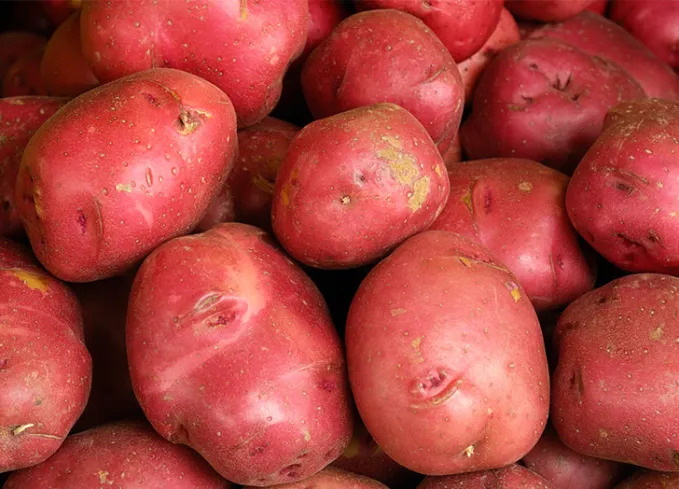
The waxy varieties contain more moisture and less starch. They are thin-skinned and have a firm texture that holds them together while cooking. Red potatoes have a smooth, red exterior and a creamy white interior.
These potatoes work well for salads, steaming, and boiling. Due to their ability to stay intact, these potatoes give dishes more structure and flavor. Waxy Potatoes work great in casseroles or soups that call for chunks as opposed to mashed.
All-Purpose Potatoes
Some potatoes fall somewhere between starchy and waxy. They offer versatility when cooking. Yukon Gold potato is a favorite all-purpose variety. It is versatile, with golden flesh that has a buttery flavour.
Yukon Gold potatoes have a balanced texture and are good for soups. Because of their well-balanced texture, they are the perfect choice when a recipe is not specific.
Fingerling Potatoes
Fingerling potatoes can be small, narrow, and slightly curved. The texture is waxy and firm. They come in many different colors. The Handling Potato is a popular variety.
The fingerlings, due to their size and shape, are usually pan-fried or roasted whole. Their exterior crisps while the inside remains creamy. Visually appealing, they add elegance to plates. These potatoes showcase the wide variety of potatoes not only in taste, but also in appearance.
Colorful And Special Varieties
Other than the regular supermarket potatoes, you can find a variety of vibrant specialty varieties. The purple potato variety, for example, has deep violet flesh thanks to the natural pigments. They are a favorite for striking visual meals because they have a slightly sweet flavor.
The blue, pink, or heirloom varieties may also be grown in other regions. These potatoes could have different flavors or textures. This shows that there are wide varieties of potatoes beyond the basic brown and whitish ones.
Matching Potatoes And Cooking Methods
It is important to choose the right potato for both taste and texture. Starchy potatoes work best for fluffy, light mashed taters or crisp fries. The waxy variety is ideal for dishes or salads that require firm slices. All-purpose russet potatoes are great for when you want to use the same technique over and over again with consistent results.
The key to success is to realize that different types of potatoes will suit different culinary purposes. When substituting potatoes, you can get a different result.
Last Thoughts
They may seem straightforward, but potatoes are extremely diverse. Each potato type is unique, whether it’s the big, fluffy russets or the small, delicate fingerlings. Everyone can become a better cook by learning about how texture and the starch content of potatoes influence cooking.
Discovering the many types of potatoes will make any meal more tasty and enjoyable. Look beyond the familiar when you next shop and try a variety that is new. You might discover that a particular favorite changes the way in which you cook.

Table of Contents
With Hypic MOD APK take your blurry photos to the next level. See how to convert an image into HD, professional on Android. Download now with hypicapk.net.in!
In this day and age of the internet, photos are everything. Whether it’s for social media posts, personal memories, a good quality picture makes all the difference. But what if your photos are blurred, pixelated and low-quality? This is where the Hypic MOD APK comes. An AI-based image editor allows users to enhance blur and lower-quality photos in a matter of seconds, giving their images that professional look without any complicated tools. The MOD APK Version of official Hypic app unlocks premium filters, ad-free access, unlimited AI enhancement usage, and everything else regarding the whole version of all tools.
Why Use Hypic to Enhance Low-Quality Photos?
The manual enhancement of photos can be a lengthy process, often requiring technical skills. Hypic simplifies this with AI. Here’s why that’s the best pick:
Automatic Optimization: Easily enhance the color, sharpness and details with one click
Maintains Original Quality: No detail is lost with AI
Device Compatible: Compatible with both Android and iOS
Most free apps will degrade quality or limit functionality. To summarize, Hypic MOD APK is ideal for users who need top-notch and instant photographs on a budget but with pro quality.
Step-by-Step Guide to Enhance Low-Quality Photos
Download and Install Hypic MOD APK
Before anything, you need to download the trusted Hypic MOD APK file from a trusted source like hypicapk.net.in.
- For Android users, enable “Unknown Sources” in your device settings
- Download Latest Hypic MOD APK File from trusted source.
- Install the app on your phone
Please make sure to download from a safe source lest you get malware or a corrupted binary.
Launch the App and Add Your Photo
- Launch Hypic MOD APK
- Click on Upload Photo or Select from Gallery
- Select the low quality image you wish to upgrade
This also works for files in JPG, PNG. and HEIC formats.
Choose the Tool for AI Enhancement
Hypic offers several enhancement tools:
Auto Enhance: AI Beautifies photos instantly, Ideal for newcomers
Sharpness Boost: Fixes blurry images
Color Repairing: Brightness, Contrast and Saturation adjustment
Portrait Enhancer: Perfects selfies and human images
Just choose your desired tool and let the AI upscale your photo autonomously.
Step 4: Preview and Compare
Compare the before and after before you save:
Tap Preview → Drag the slider to compare between original and enhanced image.
If necessary, adjust some of the settings to get a more natural appearance
Tip: The photos that aren’t very pixelated yield better results.
Step 5: Save and Share
Once satisfied, tap Save then export in HD quality. Share to Instagram, Facebook, WhatsApp etc.
Your low-quality photo now looks professional and can be used on social media or printed.
Tips to Get the Best Results
Although Hypic is strong, following these suggestions maximizes photo quality:
- Consider highest original you have
- Avoid excessive zooming before enhancement
- Experiment with various AI filters to identify the one that yields the best results
- Print or batch process multiple photos for social media albums
- If needed, manually adjust contrast and brightness
Common Issues and How to Fix Them
There are few issues users might face while using Hypic MOD APK. Here’s how to fix them:
| Problem | Solution |
| App crashes on launch | Clear cache or reinstall MOD APK |
| Enhancement not applied | Check if the photo format is supported |
| Low-resolution export | Ensure “HD Export” is enabled |
| Security warnings | Only download from trusted sources |
Following these tips ensures smooth performance and safe usage.
Comparison: Hypic MOD APK vs Other Photo Editors
| Feature | Hypic MOD APK | Free Photo Editors |
| AI Enhancement | One-click professional results | Limited |
| Premium Filters | Unlocked | Paid version only |
| Ads | No ads | Ads everywhere |
| HD Export | Available | Often restricted |
| User-Friendly | Beginner-friendly | Can be complex |
Clearly, Hypic MOD APK is the best choice for enhancing low-quality photos without technical hassle.
Conclusion
Improving low-quality photos doesn’t get easier than this. Hypic MOD APK allows you to turn blurry, pixelated, or dull images into beautiful and high-quality photos in seconds. It can be as handy as if you are a social media lover, Content Creator or just want your personal pics to be good. Don’t wait—download Hypic MOD APK now and start creating beautiful, high-quality images that are ready to share on Instagram, Facebook, or any platform!
FAQs About Hypic MOD APK
Q1: Is Hypic MOD APK safe to use?
Yes, it is safe to use personally if you are downloading from trusted sources.
Q2: Can I use the Hypic MOD APK on my iPhone?
At present MOD APK files are native to Android but iOS users can grab the official Hypic app.
Q3: Do I need the internet for AI enhancement?
Yes, certain AI features need an internet connection to process images.
Q4: What types of photos work best?
Portraits and selfies, Instagram photos and low-light pictures get the biggest boost of all.
Q5. Are all premium filters unlocked in Hypic MOD APK?
Yes, MOD APK versions unlock all premium filters and AI tools that are restricted in the official app.
Q6. Can Hypic MOD APK replace professional photo editors?
While Hypic MOD APK is excellent for quick AI enhancements, professional editors like Photoshop are still better for complex editing. Hypic is perfect for instant improvements and social media use.

Table of Contents
Why Growth Strategy Matters More Than Growth Speed
Growth is often treated as proof of business success, but not every form of growth improves long-term stability. A company may increase sales, expand into new markets, or add customers quickly while weakening its internal structure at the same time. For this reason, founders often face an early strategic question: should the business prioritize scaling as fast as possible, or should it grow at a pace that allows internal systems to remain stable? In digital markets, where attention often shifts from business analysis to entertainment products such as jetx casino game, the contrast also illustrates how fast external activity does not always reflect durable value.
Scaling and sustainability are not opposite ideas, but they create different operational priorities. Scaling focuses on expanding volume, market presence, and revenue capacity. Sustainability focuses on preserving financial control, delivery quality, and resilience during expansion.
The stronger choice depends on how the business generates income, how predictable demand is, and how much operational pressure the founder can absorb.
What Scaling Means in Practical Terms
Scaling usually means increasing revenue faster than costs rise.
A business is considered scalable when additional customers can be served without proportional growth in operational burden.
Examples often include:
- digital products
- platform businesses
- standardized subscription systems
- repeatable distribution models
The attraction of scaling is clear: if each additional sale creates strong margin, the business can expand quickly while improving total financial output.
But this works only when the underlying system is already stable.
Why Scaling Often Requires Earlier Capital Pressure
Rapid scaling usually creates spending before future revenue arrives.
This often includes:
- hiring
- technology upgrades
- wider marketing
- logistics expansion
- inventory growth
A business may therefore appear successful externally while carrying increasing internal pressure.
Scaling becomes risky when projected growth is used to justify costs before repeatable revenue confirms that growth will continue.
This is why many businesses struggle after rapid expansion: cost commitments rise before the operating model is fully tested.
Sustainability Focuses on Controlled Repeatability
Sustainable growth usually means the business expands only when existing operations remain reliable.
This approach often prioritizes:
- stable cash flow
- measured hiring
- tested processes
- reserve protection
Instead of asking how fast the company can grow, sustainable strategy asks whether each new step can support itself without weakening the previous stage.
This often results in slower visible growth, but stronger internal consistency.
Why Rapid Growth Can Hide Structural Weakness
A business growing quickly may temporarily hide important weaknesses because incoming revenue covers operational problems.
Examples include:
- weak internal reporting
- unclear customer retention
- poor inventory discipline
- dependence on one sales channel
As long as sales continue rising, these weaknesses remain less visible.
But when growth slows, the underlying problems become costly.
Rapid expansion therefore requires stronger control systems than many founders expect.
Sustainability Protects Decision Quality
One advantage of slower, controlled growth is that decisions remain linked to real data rather than expectation.
A sustainable business often expands after confirming:
- customer retention
- delivery stability
- predictable margins
This improves judgment because decisions follow operating evidence.
When expansion moves too quickly, many decisions depend on forecasts rather than current performance.
The Role of Capital in Choosing a Growth Path
Capital strongly influences whether scaling is realistic.
Businesses with external funding may accept faster expansion because reserves can absorb temporary losses.
Businesses funded mainly through internal cash flow often benefit more from sustainable pacing because each error directly affects survival.
This means the growth strategy must fit capital structure.
A growth model copied from larger firms often fails when capital conditions differ.
Customer Experience Changes Under Both Models
Scaling often introduces customer experience risk because service systems must handle larger volume quickly.
Common problems include:
- slower support
- delivery inconsistency
- communication delays
Sustainable growth usually protects customer experience because capacity is expanded only after existing volume becomes manageable.
This matters because weak customer experience often damages future growth more than slow expansion does.
Hiring Pressure Creates Different Outcomes
Fast growth usually requires earlier hiring.
This can improve capacity, but also creates risk if roles are added before processes are clear.
A sustainable model often delays hiring until tasks become repeatable enough to transfer clearly.
The difference is important because poorly timed hiring often increases cost without improving output.
Market Timing Sometimes Favors Faster Scaling
There are cases where rapid scaling is justified.
This usually happens when:
- market windows are short
- competitor entry is accelerating
- product adoption is moving quickly
In such situations, waiting too long may reduce opportunity.
But even then, scaling still requires operational discipline.
Speed does not remove the need for internal control.
Sustainability Is Not the Same as Caution
A sustainable strategy does not mean avoiding growth.
It means choosing growth that can survive pressure.
This often includes:
- adding one market at a time
- expanding one product line carefully
- increasing marketing only after conversion is understood
The business still grows, but each stage is tested before the next stage begins.
Revenue Quality Matters More Than Revenue Speed
A central issue in growth strategy is whether revenue is durable.
Fast revenue growth from unstable customers may look strong but weaken quickly.
Slower revenue from repeat customers often creates stronger long-term performance.
This is why sustainable businesses often build stronger resilience even when headline growth appears lower.
Hybrid Strategies Often Work Best
Many businesses combine both models.
For example:
- scaling one proven segment quickly
- keeping other areas controlled
- using pilot expansion before full rollout
This allows growth where evidence exists while protecting the rest of the business from unnecessary pressure.
Founder Capacity Often Determines the Real Limit
Even when market opportunity exists, founder capacity matters.
Growth creates pressure in:
- decision volume
- communication
- hiring oversight
- financial review
A strategy that exceeds leadership capacity often weakens execution.
This is why the correct growth speed is often lower than external ambition suggests.
Conclusion
Scaling and sustainability are not competing ideas. They are different ways of managing expansion under different conditions.
Scaling works when systems, capital, and market timing support larger movement. Sustainability works when preserving financial control and delivery quality matters more than visible speed.
The strongest growth strategy usually depends on one principle: expand only at a pace where the business remains understandable to the people running it.

Table of Contents

Introduction
In the ever-evolving world of online slot games, the term idnslot gacor has become one of the most searched keywords among players. Many believe that by finding the right “gacor” slot, their chances of winning big significantly increase. But is there really such a thing as a gacor slot, or is it just a myth circulating in player communities?
This article will explore everything you need to know about idnslot, how to find gacor slots updated daily, effective strategies, and essential tips to help you play smarter and maximize your outcomes.
What is IDNSlot?
IDNSlot is a popular online slot platform widely recognized among players, especially in Southeast Asia. It is known for:
- A wide variety of slot games
- Competitive RTP (Return to Player) rates
- User-friendly interface
- Regular updates of new games
Because of these features, many players actively search for idnslot gacor slots every day to improve their winning opportunities.
Understanding “Gacor” Slots
“Gacor” is a slang term used by players to describe a slot machine that is perceived to be “hot” or frequently paying out wins.
Typical characteristics of gacor slots include:
- High win frequency
- Frequent free spins
- Regular bonus triggers
- Perceived higher RTP performance
However, it is crucial to understand that all slot games operate using RNG (Random Number Generator), meaning outcomes are always random.
Why Do Players Search for IDNSlot Gacor Slots?
The popularity of the keyword idnslot gacor comes from several reasons:
1. Higher Winning Expectations
Players believe certain slots offer better payout patterns.
2. Better Bankroll Efficiency
Choosing the “right” slot is thought to stretch playing time and increase returns.
3. Daily Updates
Many websites claim to provide updated gacor slot lists daily, attracting players seeking fresh insights.
IDNSlot Gacor Slot List Today
Here are common categories often considered gacor:
High RTP Slots (96% and above)
Slots with higher RTP tend to return more value over time.
Low Volatility Slots
Ideal for players who prefer smaller but more frequent wins.
Bonus-Rich Slots
Games with frequent bonus features are often labeled as gacor.
How to Find IDNSlot Gacor Slots Daily
Here are some practical methods:
1. Check Daily RTP Data
Some platforms display real-time RTP percentages.
2. Follow Slot Communities
Forums and social media groups often share insights and trends.
3. Use Demo Mode
Test games before betting real money.
4. Observe Gameplay Patterns
While RNG is random, players often track perceived patterns.
Effective Strategies for Playing IDNSlot
To maximize your experience with idnslot, consider these strategies:
1. Set a Budget
Always define your spending limit before playing.
2. Use Manual Spins
Avoid auto-spin to maintain better control.
3. Take Advantage of Bonuses
Use promotions to extend gameplay.
4. Choose Your Timing
Some players believe certain times yield better results.
Pro Tips for Playing Gacor Slots
- Start with small bets
- Increase bets after wins
- Stop when you reach profit
- Never chase losses
Myths vs Facts About Gacor Slots
Myths:
- Slots can be manipulated to become gacor
- There are fixed “gacor hours”
- Spin patterns guarantee wins
Facts:
- All slots use RNG systems
- No guaranteed winning strategy exists
- “Gacor” is mostly based on player perception
Advantages of Playing on IDNSlot
- Wide game selection
- Secure system
- Attractive bonuses
- 24/7 customer support
Common Mistakes Slot Players Make
Avoid these common errors:
- Playing without a strategy
- Believing myths too strongly
- Poor bankroll management
- Emotional decision-making
How to Manage Your Bankroll
Good bankroll management is essential:
- Divide your budget into sessions
- Set win and loss limits
- Never use essential funds
Do Gacor Slots Really Exist?
Technically, no slot is guaranteed to be gacor since all outcomes are random. However, player experiences often create the perception that certain slots perform better at certain times.
This perception can be influenced by:
- Luck
- Timing
- Strategy
Recommendations for Beginners
If you’re new to idnslot, here are some tips:
- Start with low bets
- Learn game mechanics
- Don’t rush
- Focus on entertainment, not just profit
The Role of RTP in Gacor Slots
RTP plays a significant role:
- Higher RTP = better long-term return
- Lower RTP = higher risk
But RTP does not guarantee short-term wins.
The Importance of Discipline
Discipline is key in slot gaming:
- Stick to your plan
- Avoid impulsive decisions
- Stop when goals are reached
Daily Gacor Slot Updates: Are They Important?
Many platforms claim to offer daily gacor slot updates. These can help players:
- Discover trending games
- Follow player insights
- Get references
However, always use such information wisely.
How to Choose the Right Slot
Consider these factors:
- RTP percentage
- Volatility
- Game theme
- Bonus features
Psychology in Slot Gaming
Slot gaming also involves mental factors:
- Patience
- Emotional control
- Decision-making
The Future of IDNSlot
With advancing technology, platforms like idnslot continue to evolve:
- Better graphics
- More interactive features
- Enhanced gaming experience
Conclusion
IDNSlot gacor slots remain a popular topic among online slot players. While there is no guaranteed way to find a permanently gacor slot, using the right strategies, proper bankroll management, and understanding the mechanics can significantly improve your overall experience.

Enhance Low-Quality Photos Instantly Using Hypic MOD APK

Scaling vs Sustainability: Choosing the Right Growth Strategy
IDNSlot Gacor Slot List Updated Every Day – Complete Guide for Smart Players
Start Earning from Raja Game Today

Luka Hein Lawsuit Explained: Key Issues And Legal Arguments

How Trusted Platforms Source Quality Financial Sector Backlinks

1000+ Great Instagram Bio For Boys – Stylish & Attitude Bio

1500+ Perfect Instagram Bio For Hindu

500+ Great Mahakal Bio For Instagram 2024

Krishna Bio For Instagram

Hanuman Ji Bio For Instagram
250+ Best Music Bio For Instagram 2024 – Music Lover Bio
-
Instagram Bio Ideas2 years ago
1000+ Great Instagram Bio For Boys – Stylish & Attitude Bio
-
Instagram Bio Ideas2 years ago
1500+ Perfect Instagram Bio For Hindu
-
Instagram Bio Ideas2 years ago
500+ Great Mahakal Bio For Instagram 2024
-
Instagram Bio Ideas1 year ago
Krishna Bio For Instagram
-
Instagram Bio Ideas1 year ago
Hanuman Ji Bio For Instagram
-
Instagram Bio Ideas2 years ago
250+ Best Music Bio For Instagram 2024 – Music Lover Bio
-
 Facebook Bio Ideas2 years ago
900+ Perfect Facebook Bio For Boys 2024 – Attitude Bio
-
 Facebook Bio Ideas2 years ago
1200+ Best Facebook bio ideas 2024 – Stylish, Short and Unique FB bio