
Blog
Daily Discipline Habits for Long-Term Personal Growth and Self-Improvement

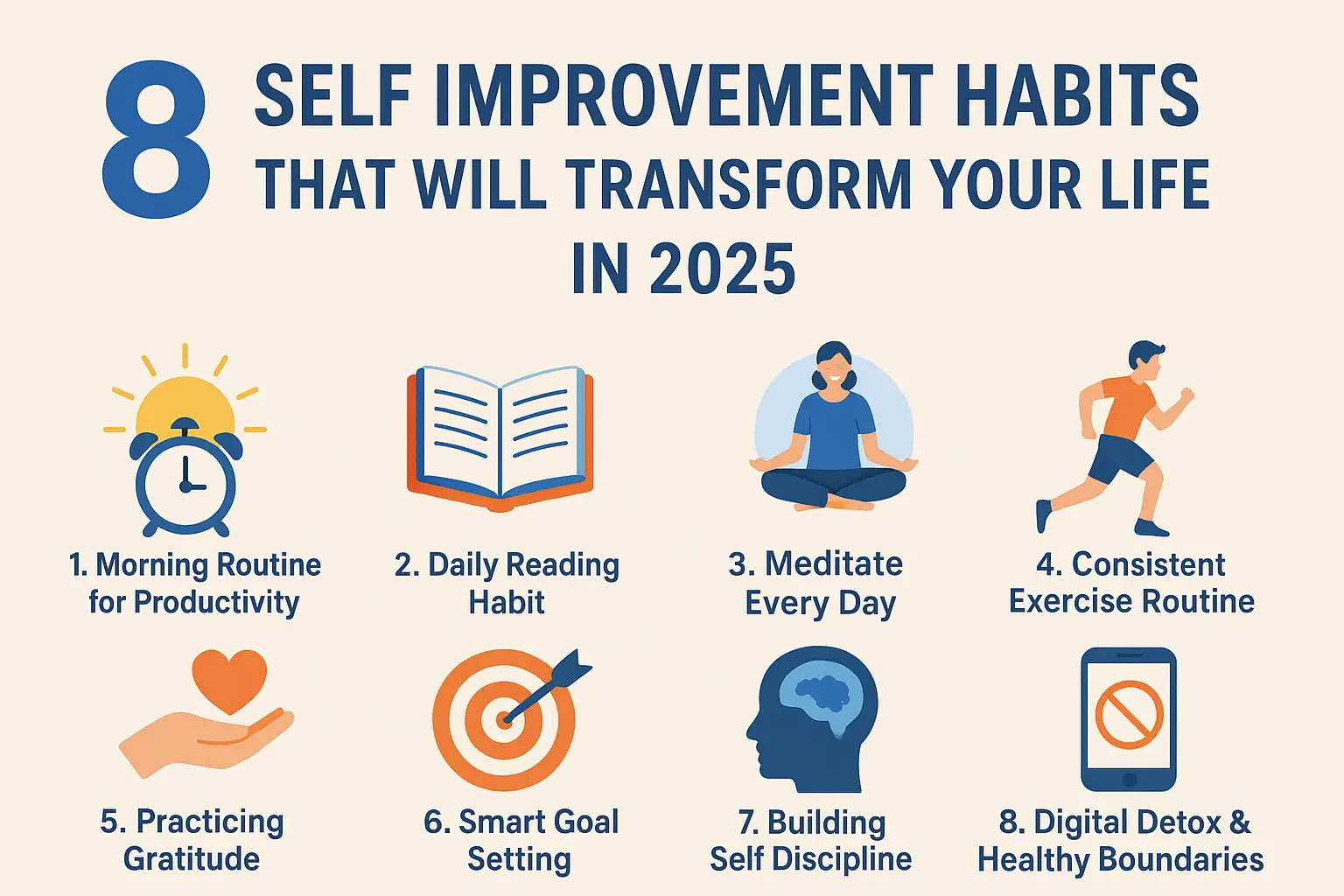
Motivation is a myth. Let’s be clear: you’re not going to wake up every day feeling fired up to achieve your goals. But if you’re disciplined, it doesn’t matter. BE THE ONE isn’t about chasing fleeting motivation—it’s about building systems that keep you consistent. Valon Asani didn’t rely on motivation to create successful platforms—he relied on discipline.
Achieving lasting personal growth is not about making one big change—it’s about building small, consistent habits that shape your life over time. In a world full of distractions and instant gratification, developing daily discipline is the key to staying focused and committed to your goals. When paired with intentional self-improvement, discipline becomes the foundation for long-term success. At BE THE ONE, we believe that transformation begins with the habits you practice every single day.
The Importance of Daily Discipline
Daily discipline is the ability to take consistent action regardless of your mood or circumstances. While motivation can be unpredictable, discipline ensures that you continue moving forward. It helps you stay committed to your goals, even when progress feels slow or challenges arise.
By practicing discipline daily, you create a structure that supports growth. Over time, these repeated actions turn into habits, and those habits shape your future. Discipline is not about perfection—it’s about consistency and commitment.
How Habits Shape Personal Growth
Habits are the building blocks of your life. Every action you repeat daily contributes to who you become. Positive habits lead to growth, while negative habits can hold you back.
For long-term personal growth, it’s essential to identify habits that align with your goals. Whether it’s reading, exercising, learning, or practicing mindfulness, these habits create a strong foundation for self-improvement. When practiced consistently, they compound over time, leading to significant transformation.
Starting Your Day with Purpose
A disciplined day begins with a strong morning routine. How you start your day often determines how productive and focused you will be.
Incorporate habits such as waking up early, setting intentions, and engaging in activities that energize you. This could include exercise, reading, or journaling. Starting your day with purpose helps you take control of your time and sets a positive tone for the rest of the day.
Building Consistency Through Small Actions
One of the biggest mistakes people make is trying to change everything at once. Sustainable growth comes from small, manageable actions performed consistently.
Instead of overwhelming yourself with multiple goals, focus on one or two habits at a time. For example, commit to 20 minutes of learning or 10 minutes of exercise daily. These small actions may seem insignificant, but over time, they create powerful results.
Strengthening Self-Improvement Through Reflection
Self-improvement is not just about taking action—it’s also about understanding your progress. Reflection helps you evaluate what’s working and what needs improvement.
Set aside time each day or week to review your habits and actions. Journaling can be an effective way to track your thoughts, achievements, and challenges. This process increases self-awareness and helps you stay aligned with your goals.
Overcoming Distractions and Staying Focused
In today’s digital age, distractions are everywhere. Staying disciplined requires the ability to manage your environment and focus on what truly matters.
Identify the distractions that affect your productivity and take steps to minimize them. This could mean limiting screen time, creating a dedicated workspace, or setting boundaries with your time. By reducing distractions, you can maintain focus and stay consistent with your habits.
Developing Mental Resilience
Long-term personal growth requires mental strength. There will be days when you feel unmotivated or face setbacks. During these times, discipline becomes your greatest asset.
Developing resilience means learning to push through challenges and stay committed to your goals. Instead of giving up, use obstacles as opportunities to learn and grow. This mindset helps you build confidence and strengthens your ability to handle future challenges.
Creating an Evening Routine for Continuous Growth
Just as a strong morning routine sets the tone for your day, an evening routine helps you reflect and prepare for the next day.
Take time to review your progress, plan your tasks, and relax your mind. This could include journaling, reading, or simply disconnecting from digital devices. An effective evening routine ensures that you end your day with clarity and intention.
Staying Accountable to Your Goals
Accountability is a powerful tool for maintaining discipline. When you track your habits and progress, you become more aware of your actions and more committed to your goals.
You can use journals, habit trackers, or even share your goals with a friend or mentor. Accountability creates a sense of responsibility and motivates you to stay consistent, even when it’s challenging.
The Motivation Trap:
The biggest lie we’ve been sold is that motivation is the key to success. But motivation fades. Discipline? It doesn’t. Valon learned early in his entrepreneurial journey that success doesn’t come from waiting for inspiration—it comes from committing to the grind every single day. That’s why BE THE ONE is all about creating systems that foster daily discipline, not just short bursts of motivation.
Building Systems for Success:
Discipline is built through small actions repeated daily. Valon’s success didn’t come from magic—it came from showing up, day after day, building strong habits, and letting those habits compound. BE THE ONE helps you do exactly that, taking the guesswork out of personal growth and turning discipline into a lifestyle.
Conclusion
Daily discipline habits are the foundation of long-term personal growth and self-improvement. By focusing on small, consistent actions, you can create a system that supports continuous development.
Remember, transformation doesn’t happen overnight—but with patience, commitment, and the right habits, it becomes inevitable. Start with simple steps, stay consistent, and keep improving every day.
At BE THE ONE, we believe that everyone has the potential to achieve greatness. The journey begins with your daily habits. Take control, stay disciplined, and BE THE ONE who turns effort into lasting success.
BE THE ONE: Stop Fixing. Start Becoming. is a comprehensive self-development system designed for individuals committed to personal transformation through discipline, identity, and daily action. Unlike traditional habit-tracking apps or self-help platforms, BE THE ONE recognizes that habits fail when they’re attached to the wrong identity – you cannot out-discipline a broken self-image. The platform’s core philosophy centers on identity-first development. Users begin each day with morning intention practices that activate the body first (cold exposure, movement, breath work) before the world demands attention.
This is followed by daily confrontation – not affirmations, but honest self-assessment and truth-telling with your authentic self. BE THE ONE’s tracking system focuses on seven non-negotiables: Body, Mind, Spirit, Craft, Connection, Contribution, and Rest. Each element is tracked with accountability and no excuses. The AI-guided reflection component provides personalized insights, shadow integration work, and archetype coaching to help users understand themselves more deeply. Currently in beta phase with an Inner Circle program for early adopters, BE THE ONE offers a daily operating system for those ready to move beyond consuming personal development content and actually become the person they’re meant to be.
Founder / CEO Bio
Valon Asani is a Swiss-Albanian serial entrepreneur based in Zürich, Switzerland. He is the founder of dua.com, one of the leading dating platforms for Albanian-speaking communities worldwide, and CEO of Spotted.de, one of Europe’s top hyperlocal dating apps with over 3 million users. Before entering the tech and dating space, Asani founded and led MIK Group, a Google Partner Agency, for 7.5 years. His entrepreneurial journey spans over 15 years, from digital marketing to building consumer platforms serving millions of users. Driven by a passion for personal growth and self-mastery, Asani created BE THE ONE in 2025 – a self-development platform rooted in discipline, identity, and daily transformation.

Introduction
Starting a new enterprise in Singapore can be an exciting step for a founder, but success depends on more than having a good business idea. Before opening a bank account, hiring employees, or looking for customers, entrepreneurs need to make several important decisions about their business structure, ownership, management, finances, tax obligations, and compliance duties. Singapore offers a strong environment for startups, small and medium-sized enterprises, and international businesses, but companies must still follow the rules set by the Accounting and Corporate Regulatory Authority (ACRA), Inland Revenue Authority of Singapore (IRAS), and other government agencies. Understanding these requirements early can help reduce delays and avoid costly mistakes. ACRA confirms that registering a business involves decisions about the business structure, name, registration, and post-registration obligations.
For founders researching how to set up a company in singapore, the process becomes easier when the major decisions are made before incorporation. A well-planned approach can create a stronger legal and financial foundation for the years ahead. This is especially important for foreign entrepreneurs who may need to meet local residency rules, engage a corporate service provider, and consider suitable work pass options if they plan to move to Singapore. Working with an experienced corporate services provider such as 3E Accounting Singapore can also help entrepreneurs coordinate company incorporation, accounting, taxation, corporate secretarial work, and regulatory compliance under one service relationship. The goal should not simply be to register a company, but to build a business that is ready to operate responsibly and grow.
Choose the Right Business Structure
One of the first decisions is choosing the legal structure that fits the business. For many entrepreneurs, a private company limited by shares, commonly known as a Pte. Ltd., is an attractive option because the company is a separate legal entity and shareholders generally have limited liability. This structure can also provide a more formal platform for raising capital, hiring employees, entering contracts, and expanding operations. However, a company is not automatically the best choice for every situation. Entrepreneurs should consider their business activity, ownership plans, expected growth, risk exposure, financing needs, and long-term goals before selecting a structure. ACRA notes that Singapore businesses can use different structures, and the appropriate choice depends on factors such as liability, cost, and potential for growth.
This decision is particularly important when learning how to set up a company in singapore because incorporation creates ongoing responsibilities. A private limited company needs directors, shareholders, a company secretary, a registered office, and other required company information. At least one director must be ordinarily resident in Singapore, while a company secretary must be appointed within six months of incorporation and cannot be the same person as the sole director. Foreign founders should pay close attention to these requirements before making commitments. 3E Accounting Singapore can support entrepreneurs with company incorporation, corporate secretarial services, registered office arrangements, and related compliance work, helping founders understand what needs to be prepared before submitting an incorporation application.
Plan Ownership, Directors, and the Company Name
Ownership is another major decision that should be settled before incorporation. Founders should decide who will own the shares, how much each shareholder will hold, and whether future investors may be added. Clear ownership arrangements can prevent disagreements later, particularly when two or more founders are involved. It is also useful to think about the role of each director and shareholder because ownership and management are not always the same. Directors are responsible for running the company and making decisions about its strategy and direction, while shareholders own the company through their shares. Understanding this difference helps create a clearer governance structure from the beginning.
The company name also deserves careful thought. A strong name should be easy to remember, suitable for the intended market, and consistent with the company’s long-term brand. ACRA requires a business name to be reserved before registering a new company, and the approved name must be used for the same entity type selected during the reservation process. Founders should also think about the company’s business activities, financial year end, registered office, share capital, and constitution before completing registration. These details form part of the company’s official foundation. For entrepreneurs exploring how to set up a company in singapore, making these decisions in advance can make the incorporation process more organized and reduce the risk of having to change important information later.
Prepare for Tax, Accounting, and Financial Responsibilities
Financial planning should begin before the company starts trading. A new enterprise needs a realistic view of startup costs, operating expenses, salaries, professional fees, technology costs, marketing, office expenses, and working capital. Separating personal and business finances is also important because it makes financial reporting clearer and supports better business decisions. Proper bookkeeping allows business owners to understand revenue, expenses, cash flow, profitability, and outstanding obligations. It also creates useful records for tax filing and financial planning. A company should establish an accounting system early rather than waiting until the first tax deadline approaches.
Tax planning is another important part of launching a Singapore company. Singapore’s corporate income tax rate is currently a flat 17% of chargeable income for both local and foreign companies, subject to applicable rules and tax schemes. Businesses should also assess whether they need to register for Goods and Services Tax (GST). IRAS states that compulsory GST registration can apply when taxable turnover exceeds the relevant threshold, including the $1 million threshold under the retrospective test. When considering how to set up a company in singapore, founders should therefore include corporate tax, GST where applicable, bookkeeping, payroll, financial reporting, and filing deadlines in their business plan. 3E Accounting Singapore provides accounting, bookkeeping, corporate tax advisory, tax filing, and financial support that can help businesses establish a more structured financial process from the start.
Consider Employees, Immigration, and Regulatory Compliance
Hiring decisions should also be made with care. A company may begin with the founder alone, but growth can quickly create a need for employees, managers, accountants, sales staff, or technical specialists. Employers need to understand employment requirements, payroll processes, workplace responsibilities, and the rules that apply to foreign workers. Foreigners who intend to work in Singapore generally need a valid work pass before starting work. Depending on the person’s circumstances, options may include an Employment Pass, S Pass, EntrePass, or another appropriate pass. An Employment Pass, for example, is intended for eligible foreign professionals, managers, executives, and technicians and is subject to current eligibility requirements.
For international founders, immigration planning should be considered alongside company formation rather than treated as a separate issue. Registering a company does not automatically give a foreign owner the right to live and work in Singapore. ACRA states that foreigners who want to move to Singapore to run their business need a work pass, while specific eligibility depends on their circumstances. This is where professional guidance can be useful. 3E Accounting Singapore offers immigration and work pass services and can assist eligible businesses with applications involving passes such as the Employment Pass and S Pass. For anyone researching how to set up a company in singapore, combining incorporation planning with workforce and immigration planning can create a smoother path from registration to actual business operations.
Build a Long-Term Compliance and Growth Plan
Incorporation is only the beginning of a company’s journey. After registration, the company must continue meeting statutory and financial obligations. ACRA requires companies to maintain appropriate company registers and comply with ongoing filing requirements, while corporate officers must keep company information accurate. A company secretary plays an important role in helping maintain corporate records, organize meetings, monitor deadlines, and support statutory compliance. Businesses should also establish a reliable system for accounting records, tax filings, payroll, contracts, and other documents. Treating compliance as an ongoing business process rather than a one-time task can help protect the company from avoidable problems.
A long-term plan should also consider expansion, technology, financing, hiring, intellectual property, and international markets. Singapore’s position as a regional business hub can make it a useful base for companies that intend to serve customers across Asia and beyond. However, growth can create new regulatory and financial responsibilities, so the company’s systems should be able to scale with it. 3E Accounting Singapore supports startups, SMEs, foreign entrepreneurs, and international businesses through an integrated range of corporate services, including incorporation, accounting, taxation, corporate secretarial services, immigration support, and business advisory. Its wider 3E Accounting International Network also supports cross-border business needs. For founders asking how to set up a company in singapore, the strongest approach is to think beyond registration and create a practical plan for compliance, finances, people, and sustainable growth from day one.
Conclusion
Launching a local enterprise requires thoughtful decisions before the company officially begins operations. Choosing the right business structure, deciding ownership, selecting directors, reserving a suitable company name, preparing financial systems, understanding tax obligations, planning for employees, and managing regulatory responsibilities can all influence the company’s future. Entrepreneurs who approach these matters early are better positioned to avoid unnecessary delays and build a stable business foundation. Singapore’s business environment offers significant opportunities, but those opportunities are strongest when entrepreneurs understand and respect the country’s corporate and regulatory framework.
For anyone learning how to set up a company in singapore, professional support can make the process more efficient and easier to manage. 3E Accounting Singapore provides a one-stop approach covering company incorporation, corporate secretarial services, accounting, taxation, immigration, compliance, and business advisory. With the right preparation and reliable professional guidance, a new enterprise can move from an idea to a properly structured Singapore business with greater confidence. The real goal is not simply to complete incorporation, but to establish a compliant, financially organized, and scalable company that is prepared for long-term success.

Traditional cricket wisdom once treated batting order as largely fixed, a player’s specific position rarely changing match to match regardless of situation, but modern limited-overs cricket has increasingly embraced situational flexibility, promoting or holding back specific batters based on match state rather than rigid adherence to a predetermined, unchanging batting sequence.
This piece covers how situational promotion up the order actually gets decided, why this flexibility particularly suits certain player skill sets, and what statistical evidence suggests about whether this tactical shift has genuinely improved outcomes.
How Situational Promotion Up the Order Gets Decided
Modern team management increasingly promotes a batter specifically suited to a developing match situation ahead of their nominally fixed position, sending in a power-hitting specialist earlier than their typical slot if a specific match situation calls for immediate acceleration, rather than waiting for that player’s traditional position in the order to arrive naturally as overs progress. Analysis around something like tamasha live cricket betting markets increasingly factors in this kind of situational flexibility, since knowing a team’s tactical willingness to reshuffle their order based on match state adds genuine predictive value beyond simply assuming a fixed, traditional batting sequence will play out regardless of circumstances.
Why This Flexibility Particularly Suits Certain Player Skill Sets
Players specifically skilled at aggressive, high-tempo batting benefit considerably from this tactical flexibility, since their specific skill set becomes more valuable in certain match situations than their nominal batting position might otherwise dictate, a genuine power hitter waiting patiently at position six for their traditional turn while a match situation crying out for immediate acceleration unfolds represents a wasted tactical resource that situational promotion specifically addresses by getting the right skill set into play at the actual moment it’s most tactically valuable.
What Statistical Evidence Suggests About This Tactical Shift
Teams that have embraced situational batting order flexibility have generally shown improved run-rate acceleration in specific match situations compared to teams maintaining more traditionally fixed batting sequences, though isolating this specific tactical factor from broader team quality differences requires careful statistical control, since teams willing to embrace tactical innovation might also simply possess superior overall talent independent of the specific batting order flexibility itself, making definitive causal attribution genuinely difficult despite the generally positive correlation observed.
Why Some Traditionalists Remain Skeptical of This Approach
Some cricket traditionalists argue that batting order flexibility can disrupt individual player rhythm and preparation, since players mentally preparing for a specific expected batting position throughout an innings might perform less effectively when suddenly required to bat considerably earlier than anticipated, a psychological preparation concern that data-driven tactical advocates generally counter by pointing to the measurable statistical benefit of getting the right skill set into play at the actual moment it matters most tactically.
Frequently Asked Questions
How do modern teams decide when to promote a batter ahead of their usual position?
Teams promote a batter specifically suited to a developing match situation, like a power hitter during a period calling for immediate acceleration, rather than waiting for that player’s traditional slot to arrive naturally.
Why does batting order flexibility particularly benefit aggressive, high-tempo batters?
Their specific skill set becomes more tactically valuable in certain match situations than their nominal position dictates, and situational promotion gets that skill into play at the actual moment it’s needed most.
Does statistical evidence clearly show this flexibility improves team outcomes?
Generally positive correlation exists with improved run-rate acceleration, though isolating this specific factor from broader team quality differences makes definitive causal attribution genuinely difficult.
Why do some traditionalists remain skeptical of situational batting order changes?
Concern centers on disrupted player rhythm and preparation, since batters mentally prepared for a specific position might perform less effectively when suddenly required to bat considerably earlier than expected.
Conclusion
Situational batting order flexibility represents a genuine tactical evolution in modern limited-overs cricket, getting specific player skill sets into play at the moments they’re most valuable rather than adhering to rigid, traditionally fixed sequences, though isolating its precise statistical impact from broader team quality remains analytically challenging. Understanding both the tactical logic and the traditionalist counterargument provides a more complete picture of this ongoing strategic debate within modern cricket management.

Getting started with a new gaming application becomes much easier when registration and login are understood as separate parts of the same account journey. Registration creates the account, while login provides access to it later.
This Veer Game App Login and Simple Registration Process Guide is designed for beginners who want a clear understanding of how account setup can work without unnecessary confusion. It covers what to prepare before registration, how to handle account information, what verification may involve, and how to move from a newly created account to a successful login.
The exact fields, buttons, verification methods, and account requirements may change with newer versions of the service. Always follow the current information displayed by the legitimate Veer Game platform.
Registration Comes Before Regular Login
A simple rule makes the process easier to understand:
No existing account → Register
Existing account → Login
New users generally need to complete account creation before they can sign in.
Returning users should normally use their existing credentials instead of registering again.
This distinction is especially useful when opening the application for the first time.
Prepare Your Information First
Before beginning registration, collect the information you may need.
Depending on the current Veer Game Login interface, this could include:
- A mobile number or account identifier
- A password
- Verification information
- Other details requested by the registration form
Use information that you can access in the future.
Random or temporary details can create difficulties if you later need to verify ownership or recover the account.
Start From the Current App Interface
Open the currently supported Veer Game application and allow the main screen to load.
Look for an option such as Register, Sign Up, or Create Account.
The exact wording may differ between versions.
If you already have an account, do not select registration simply because it appears first. Look for the login option instead.
Think of Registration as Account Identity Setup
Registration is more than filling out a form.
It establishes the information that will identify your account later.
For this reason, take care when entering:
- Contact information
- Username or identifier
- Password
- Verification details
Review each field before submitting.
Correct information at the beginning can make future login and recovery much easier.
Creating a Secure Password
Your password will normally become one of the credentials used for future login.
Choose something difficult for other people to guess.
Avoid simple combinations based on:
- Your name
- Birth dates
- Common words
- Repeated numbers
- Publicly known information
Do not reuse a password from an important email, banking, or social-media account.
Keeping account credentials separate is a basic but useful security practice.
Verification During Registration
The current registration process may include an additional verification stage.
For example, the service may send a code to the contact method entered during account creation.
If a verification code is requested, enter it only into the legitimate registration screen.
Keep the code private.
An OTP should never be posted publicly or shared with someone who claims they need it to finish your registration.
Review Before Creating the Account
Before selecting the final registration button, perform a quick review.
Check:
Contact information — Correct
Account identifier — Correct
Password — Secure and remembered
Verification details — Accessible
Terms or requirements — Understood
This short pause can prevent mistakes that are more difficult to correct later.
What Happens After Registration?
Once account creation has been accepted, the application may take you directly into the account area or return you to the login screen.
Both experiences can vary depending on the current version.
If the app asks you to log in after registration, use the credentials you just created.
This first sign-in confirms that the account setup is functioning correctly.
Your First Login After Registration
For the first login, enter the account identifier and password associated with the newly created account.
If an additional security check appears, complete it through the current account interface.
After submitting the login request, wait for the account area to load.
Avoid pressing the login button repeatedly if the connection is slow.
A Simple Way to Remember the Process
Beginners can remember the account journey with four words:
Create → Confirm → Enter → Protect
Create: Establish the account.
Confirm: Complete required verification.
Enter: Sign in using your credentials.
Protect: Keep your account information private.
This simple framework covers the essential account-access cycle without making the process unnecessarily complicated.
Common Registration Mistakes
Entering an Incorrect Mobile Number
A single incorrect digit can cause verification or recovery problems.
Choosing an Easy Password
Simple passwords are easier for others to guess.
Ignoring Verification
If verification is required, registration may not be fully completed until that stage is finished.
Registering Multiple Times
If an account already exists, creating another account may not solve a login problem.
Using Unreliable Sources
Do not enter personal information into registration pages reached through suspicious links.
If the Registration Button Does Not Work
A registration button that appears unresponsive does not automatically indicate an account problem.
First check whether every required field has been completed.
Then verify your internet connection.
If the application still does not respond, close and reopen it.
A temporary application or network issue can sometimes prevent the request from being submitted.
When the Verification Code Does Not Arrive
If the current registration process uses a verification code and it does not arrive, check:
- The entered contact information
- Network connectivity
- Message delivery
- Whether the code has expired
- Whether a resend option is available
Avoid requesting many codes repeatedly.
If multiple codes arrive, use the current one according to the instructions shown on the screen.
What If the Contact Number Is Already Registered?
If the registration system indicates that your contact information is already associated with an account, do not automatically create another account.
You may already have an existing account.
Try the current login or account-recovery option instead.
This can be particularly useful if you registered previously and simply forgot about the account.
Registration on a New Device
Installing the application on a new phone does not necessarily mean that a new account must be created.
If you already have an account, use the existing login route where supported.
A new device may trigger additional security verification, which should be completed through the legitimate service.
Keeping the Account Ready for Future Login
After registration, maintain your account information carefully.
Remember or securely store your login credentials.
Keep access to the contact method associated with the account.
If the current service provides account-security or profile settings, review them when appropriate.
Good account maintenance can make future login much easier.
What to Do After Changing Your Password
If you reset your password later, remember that older saved credentials may no longer work.
Update your password manager or browser credentials if you use them.
When signing in from another device, make sure you are entering the newly established password.
Registration and Login Are Not the Same
| Registration | Login |
| Creates a new account | Opens an existing account |
| Used mainly by new users | Used by returning users |
| Establishes credentials | Uses established credentials |
| May include initial verification | May include security verification |
| Happens during account setup | Happens during future access |
Understanding this difference is one of the easiest ways for beginners to avoid account-access confusion.
Account Security From the Beginning
Security should start during registration rather than after the first login.
Follow these basic practices:
- Keep passwords private.
- Never share OTPs.
- Avoid suspicious registration links.
- Do not install unknown modified applications.
- Use trusted devices.
- Avoid saving credentials on public computers.
- Be careful with messages asking for account information.
A secure registration process creates a stronger foundation for future account access.
Quick Registration Health Check
Once your account is created, ask yourself:
Can I access the account?
Do I know my current login credentials?
Can I access the registered verification method?
Did I use a trusted access source?
Are my account details private?
If the answer is yes, your account is better prepared for future login sessions.
Frequently Asked Questions
How do I register on the Veer Game app?
Open the currently supported application, choose the registration or sign-up option, provide the requested information, create secure credentials, and complete any verification required by the service.
Is registration required before login?
For a new user, an account generally needs to be created before normal login can take place.
What if I already have a Veer Game account?
Use the login option rather than starting registration again.
Why is my registration information rejected?
Check the information entered and make sure it meets the requirements displayed by the current registration interface.
What if I do not receive the verification code?
Confirm the registered contact information and connection, then use the available resend option if provided.
What should I do if my number is already registered?
Try the existing login or account-recovery process rather than automatically creating another account.
Can I register using a new phone?
If you are creating a new account, follow the current registration process on the supported device. If you already have an account, use the login process instead.
Why does the registration screen look different from an older tutorial?
The application may have received an update. Interface layouts and verification procedures can change over time.
Should I share my OTP with someone helping me?
No. Keep verification codes private and use only legitimate support or recovery channels.
Does registration guarantee gaming profits?
No. Creating or accessing an account does not guarantee winnings, rewards, or financial returns.
Responsible Gaming Reminder
If Veer Game involves real-money gaming in your location, check the applicable age requirements, local regulations, and platform rules before participating.
Gaming should remain within a personal budget and should not be considered guaranteed income. Avoid chasing losses and never use essential expenses for gaming activity.
Conclusion
The Veergame App Login and Registration journey is easier when users understand the purpose of each stage.
Registration establishes the account, verification may confirm the required information, and login provides access afterward. By entering accurate information, creating a secure password, protecting verification codes, and keeping recovery details accessible, users can make future account access much simpler.
If registration does not work, identify the specific problem instead of repeating the entire process. Incorrect information, verification delays, connectivity issues, existing accounts, and application problems all require different solutions.
For a smoother experience, use the current supported Veer Game interface, keep your credentials private, and avoid unofficial shortcuts or suspicious account-access services.
Major Decisions to Make Before Launching a New Local Enterprise
How Batting Order Flexibility Has Changed Limited-Overs Strategy

Veer Game App Login – Simple Registration Process

Veer Game Official App Login – Step-by-Step Tutorial

What Makes a Successful Online Slot Platform?

DmFirst App – Latest Download and Installation Guide

1000+ Great Instagram Bio For Boys – Stylish & Attitude Bio

1500+ Perfect Instagram Bio For Hindu

Krishna Bio For Instagram

500+ Great Mahakal Bio For Instagram 2024

Hanuman Ji Bio For Instagram

900+ Perfect Facebook Bio For Boys 2024 – Attitude Bio
-
Instagram Bio Ideas3 years ago
1000+ Great Instagram Bio For Boys – Stylish & Attitude Bio
-
Instagram Bio Ideas2 years ago
1500+ Perfect Instagram Bio For Hindu
-
Instagram Bio Ideas2 years ago
Krishna Bio For Instagram
-
Instagram Bio Ideas3 years ago
500+ Great Mahakal Bio For Instagram 2024
-
Instagram Bio Ideas2 years ago
Hanuman Ji Bio For Instagram
-
Facebook Bio Ideas3 years ago
900+ Perfect Facebook Bio For Boys 2024 – Attitude Bio
-
 Instagram Bio Ideas3 years ago
250+ Best Music Bio For Instagram 2024 – Music Lover Bio
-
 Facebook Bio Ideas2 years ago
1200+ Best Facebook bio ideas 2024 – Stylish, Short and Unique FB bio